Health and Safety Policy for Gardener Millbank
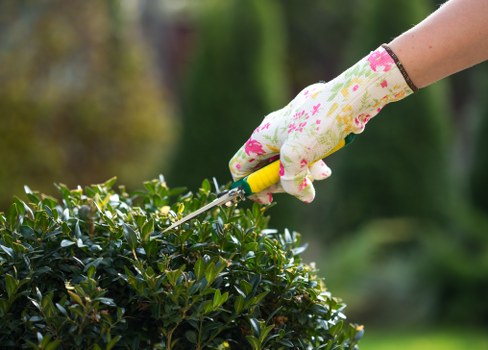 This Health and Safety policy sets out the approach taken by Gardener Millbank and affiliated teams to manage occupational risk, protect staff, clients and the public, and maintain safe working gardens and green spaces. The policy applies to all gardening activities, from routine maintenance to larger landscaping projects. It is designed to be practical and proportionate for a local gardening company while being adaptable across different service settings.
Our core objective is to deliver gardening services safely and consistently. To achieve this we emphasise risk assessment, training, and clear communication. Managers and supervisors will ensure that procedures are understood and followed, that personal protective equipment (PPE) is available, and that tools and machinery are maintained to a safe standard. Staff are expected to report hazards and to take reasonable care of their own safety and that of others.
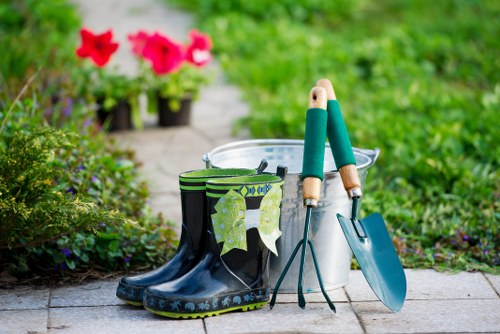 Scope: This policy covers all employees, contractors and temporary staff engaged by the Millbank gardener team, including garden clearance, hedge trimming, tree pruning support, lawn care and soft landscaping. It applies to client properties, public areas and company premises where work is planned, executed and concluded.
Responsibilities and Organisation
Senior management holds overall responsibility for the Health and Safety policy and will regularly review its effectiveness. Supervisors and team leaders are responsible for day-to-day implementation, ensuring safe systems of work are followed and that inductions are completed for new workers. Everyone is encouraged to adopt a safety-first mindset and to contribute to continuous improvement.
Employees must use PPE such as gloves, eye protection, high-visibility clothing and hearing protection where required. Machinery operators must hold appropriate competency and follow manufacturer guidance. The company provides training and records competence checks to support safe operation of powered tools, chainsaws, ride-on mowers and elevating equipment.
 Maintenance and inspection are essential. A documented schedule covers daily checks of hand tools, weekly inspections of power equipment and periodic service of larger machinery. Faulty equipment is tagged and removed from use until repaired; minor defects are logged and addressed promptly.
Risk Management and Safe Working Procedures
Risk assessments are produced for common tasks and bespoke assessments completed for higher risk works. These assessments identify hazards such as manual handling, working at height, use of pesticides, noise, and site-specific public access risks. Controls include exclusion zones, suitable lifting techniques, mechanical aids and clear signage to protect both workers and the public.
Emergency procedures are in place for incidents such as injury, severe weather or accidental release of hazardous substances. First aid kits are maintained and at least one trained first aider is present on larger projects. All incidents and near-misses are reported and reviewed to reduce future risk.
Environmental stewardship is a component of safety. Safe storage and handling of fuels, lubricants and any chemicals is required; spill kits and containment plans are in place to prevent contamination of soil and waterways. Waste is disposed of in line with permitted practices and recycling is promoted where possible.
Training and Competence: Staff competence underpins safe delivery of gardening services. Induction covers company policies, emergency procedures and the correct use of PPE. Task-specific training includes manual handling, pesticide awareness, machine operation and working near highways. Refresher training is scheduled to maintain awareness and skills.
Contractors engaged by the Millbank gardening service must demonstrate equivalent standards and provide evidence of insurance and relevant qualifications. Supervision ensures that contracted teams follow the same safety expectations and report hazards immediately.
 Monitoring and review are ongoing; safety performance indicators such as incident frequency, training completion and equipment inspection records are reviewed monthly. Management uses these metrics to identify trends, implement improvements and set targets for continuous reduction in workplace risk.
 Communication is critical. Toolbox talks, pre-start briefings and documented task plans ensure that all personnel understand the hazards and controls for each job. Clear signage and barriers protect the public and clients during works that could present trip or contact risks. Engagement with clients about scheduling and access helps reduce unexpected hazards.
Health and well-being are included in the policy. Workers are encouraged to report fatigue, stress or health concerns that may affect safe performance. Flexible rostering and sensible job planning reduce repetitive strain and exposure to extreme weather. Occupational health support is signposted for those who need it.
Review and continuous improvement: This policy is reviewed annually or following significant incidents, regulatory changes or updates to industry best practice. Management commits to investing in training, equipment and processes that enhance safety while maintaining the quality of gardening work. Workers are invited to participate in reviews and propose practical safety enhancements.
In summary, the Health and Safety policy for Gardener Millbank emphasises practical risk control, staff competence and clear communication to protect people and the environment. It is intended to be a living document that supports safe, high-quality gardening services and is applied consistently across all sites and projects.
All staff and contractors are required to familiarise themselves with this policy and to act in accordance with its provisions. By working together, the Millbank gardening teams can deliver excellent service while keeping everyone safe.